Perspective ·
Beyond one species: what solar parks and airfields would need
When an independent committee reviewed HERDER, an R&D project we're part of, it gave a positive recommendation. It also noted the system was modular enough for problems we hadn't built for, namely bird monitoring at airports and wildlife monitoring in solar parks. We took that seriously enough to think it through. In short, the core carries further than you'd expect, one of the two fits us better than the other, and neither is a product.
AI on cameras isn't new here
First, to be fair. Camera recognition isn't new at airports or solar parks. Security and CCTV systems already do it, and do it well. That's a different job, though, with live video, wired cameras on mains power, a control room and an instant response. What we'd bring works differently. Cheap off-the-shelf cameras, no live feed, running on battery or solar, and a record you own instead of a stream someone watches. It doesn't replace a security system. It's a separate layer that a site may need for another reason, to see what moves through a place over time.
What already carries over
Under HERDER sits a general core that any recognition problem on a site needs, whatever the species. That starts with intake that doesn't depend on one camera brand, over FTPS, plain FTP or manual upload. Species recognition can be limited to the country you work in. The review queue keeps the original model label next to every correction, along with who made it. Deployments record survey effort, so counts stay comparable over seasons, and there is open export to Camtrap DP and CSV. None of that is tied to one species. It's the operational layer any camera-based monitoring needs, and it's the part we can reuse.
Solar parks, the closer fit
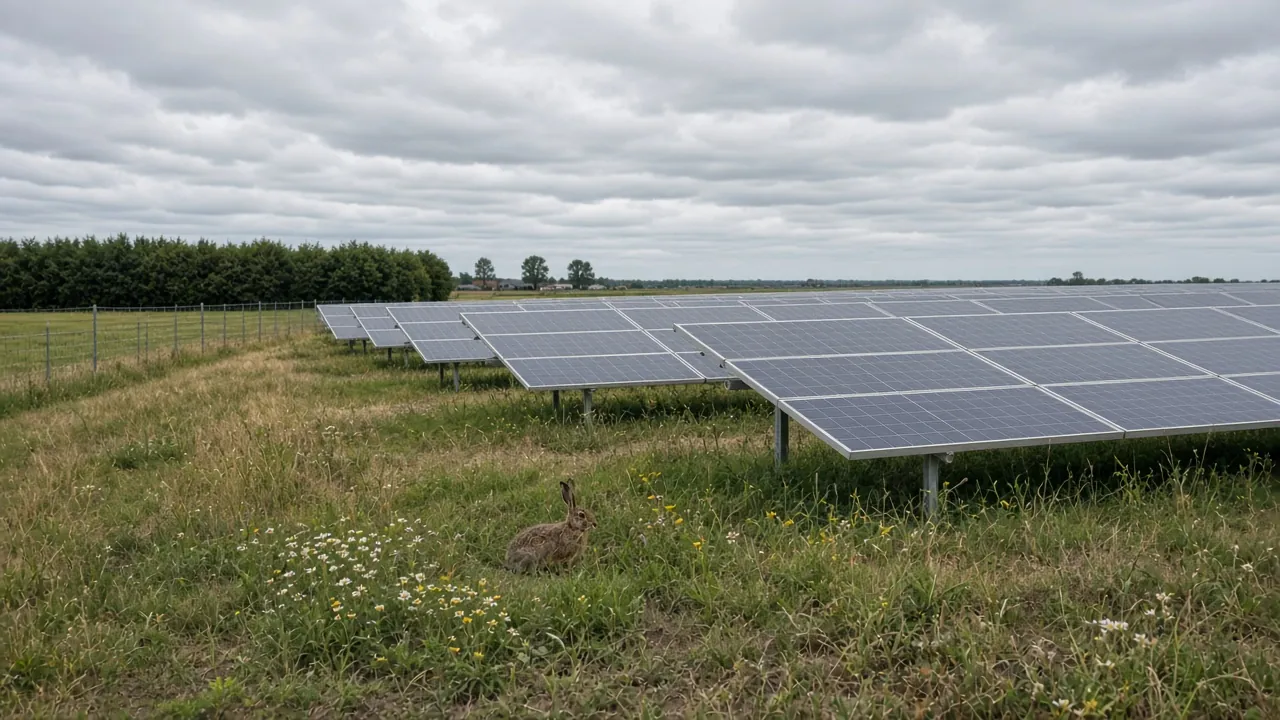
Of the two, solar parks suit us better. They're spreading fast across the Netherlands and the rest of the EU, and nature-inclusive design and impact monitoring are more and more part of permits. Fencing and panel layout affect ground-nesting birds and other species that live on the ground, and someone has to show what actually uses the site before and after. That's a monitoring and reporting job, close to what we already do. Projects and locations, effort tracking and open export map well onto an ecological impact report. Lots of cheap cameras spread over a large, fenced site without mains power is the kind of problem our approach suits.
The gap, to be clear: there's no dedicated solar-park product and no customer in this sector yet. This is an observation that the architecture would fit, not a claim that anyone uses it.
Airports, monitoring only
Airports are the more speculative of the two, and it's worth being precise about why. Bird strikes are a real safety and cost problem. The response, scaring birds away in real time, is safety-critical and has to be fast. That's exactly the kind of work we don't do. We don't do live video, and having no live feed is fine for monitoring but rules out raising an alarm in real time. The realistic fit is the monitoring side. Different species use the edges of an airfield in different ways and at different times. Knowing which birds are there, and when, over several seasons, helps with habitat management and with planning how to keep birds away.
The gap is bigger here. There's no live trigger, we haven't looked at any aviation safety certification, and we haven't spoken to an airport operator. The recognition carries over to the monitoring question. It doesn't make us a safety system.
Why we're not building either yet
Simply put, we'd rather finish what's in front of us than chase two sectors nobody has asked us for. HERDER and the Smart Wildlife Box feasibility study come first, and so does the platform itself. We start small and grow on evidence. If you work in either field and this sounds familiar, we'd like to hear from you. That's what would turn this post into a roadmap item.
The bigger point
The committee talked about a more data-driven approach to nature policy and management. We think the value there is one recognition and monitoring setup that works across problems, rather than a clever one-off for each. It's the same operational layer under a fox in a forest or a hare in a solar park. That's worth building well, once.
